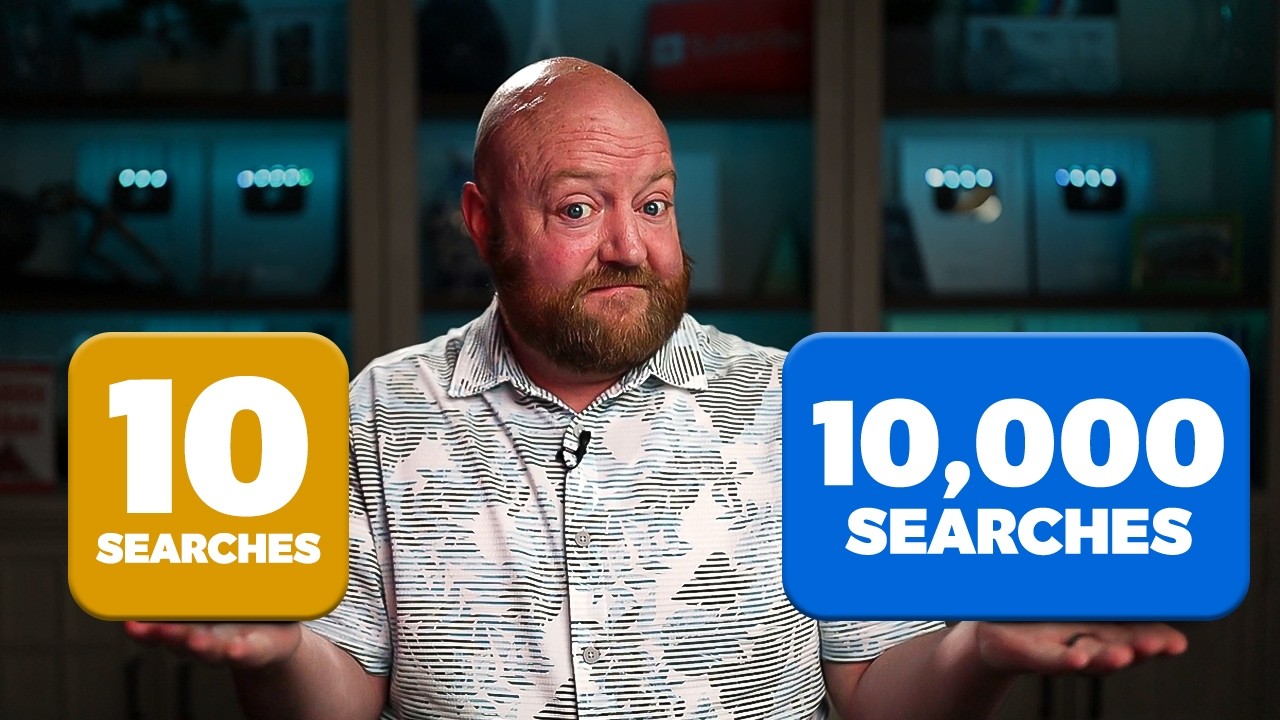
The best content opportunity is not always the topic with the most searches. A specific question from a potential client can be more valuable than a popular topic with little connection to your business.
Prioritizing content based on search intent starts with understanding the person behind the question. From there, you can identify valuable topic categories, find gaps in existing answers, and build toward more competitive searches.
Understand Who Is Asking the Question
A search query reveals clues about someone’s situation. Before turning a question into a video, consider:
- What problem is this person trying to solve?
- What does the wording reveal about their circumstances?
- Does this problem connect to your expertise or services?
- Could this person become a good client?
Specific questions often provide more useful context than broad phrases. “How much does a construction worker make in New York?” reveals a geographic need that the broader salary question leaves unanswered.
These details help you create a relevant answer. They also help you assess whether the audience fits your business.
Evaluate the Category Before the Individual Topic
One promising question does not make an entire category worth pursuing. Research the surrounding questions before committing to a series.
Imagine a category with 50 questions. Only one attracts your ideal client. The remaining questions address unrelated audiences or problems outside your expertise. That category offers limited room for useful expansion.
A category filled with questions from people you can help provides a stronger foundation. Each video can address another relevant need within the same area of expertise.
The key question is: Would attracting an audience around this entire category help your business?
Use Search Volume as Context
A topic with 10,000 monthly searches may look attractive. That number represents overall demand, not the traffic your video will receive. Existing competition can make visibility difficult.
Within a relevant category, narrower questions with modest recurring demand may offer more accessible opportunities. A collection of useful answers can gradually expand your coverage.
Search volume still matters. Its value depends on audience relevance and the quality of competing content.
Look for Gaps in Existing Search Results
Search YouTube for the specific question you are considering. Examine whether the results answer it directly.
A potential gap exists when the available videos cover the general subject without addressing the searcher’s exact situation. That gap may provide an opportunity for a focused, helpful answer.
Prioritize questions with these characteristics:
- A clear connection to your ideal client.
- Evidence of recurring search demand.
- Existing results that leave the specific question unanswered.
- An answer you can deliver with useful depth.
These factors can improve your chances of visibility. They do not guarantee a particular ranking or timeline.
Match the Title to the Searcher’s Need
A clear question can be an effective video title. Someone searching for that answer already has a reason to care.
Use the question itself when it reads naturally. Keep essential details such as location, audience, or circumstances. A clever rewrite can obscure the relevance that made the topic valuable.
Related videos can share some foundational information. Each should still provide meaningful detail for its specific audience.
Recognize the Value of Informational Searches
Potential clients do not always begin by searching for someone to hire. Many begin with a problem they need to understand.
For consultants, coaches, and educators, answering those questions can demonstrate expertise and build trust. Basic questions can be valuable when they come from the right people.
The useful test is whether the answer helps a potential client move toward solving a relevant problem.
Build From Specific Questions to Broader Topics
Start with relevant questions where existing answers are weakest. Expand into broader topics as your coverage develops.
Longer queries can provide a useful starting point. Word count itself is not a ranking formula. Specificity, audience fit, and competition determine the opportunity.
A strong content plan prioritizes people through a deliberate sequence: choose a relevant category, answer underserved questions, and progressively address larger topics. Search intent gives that sequence its direction.