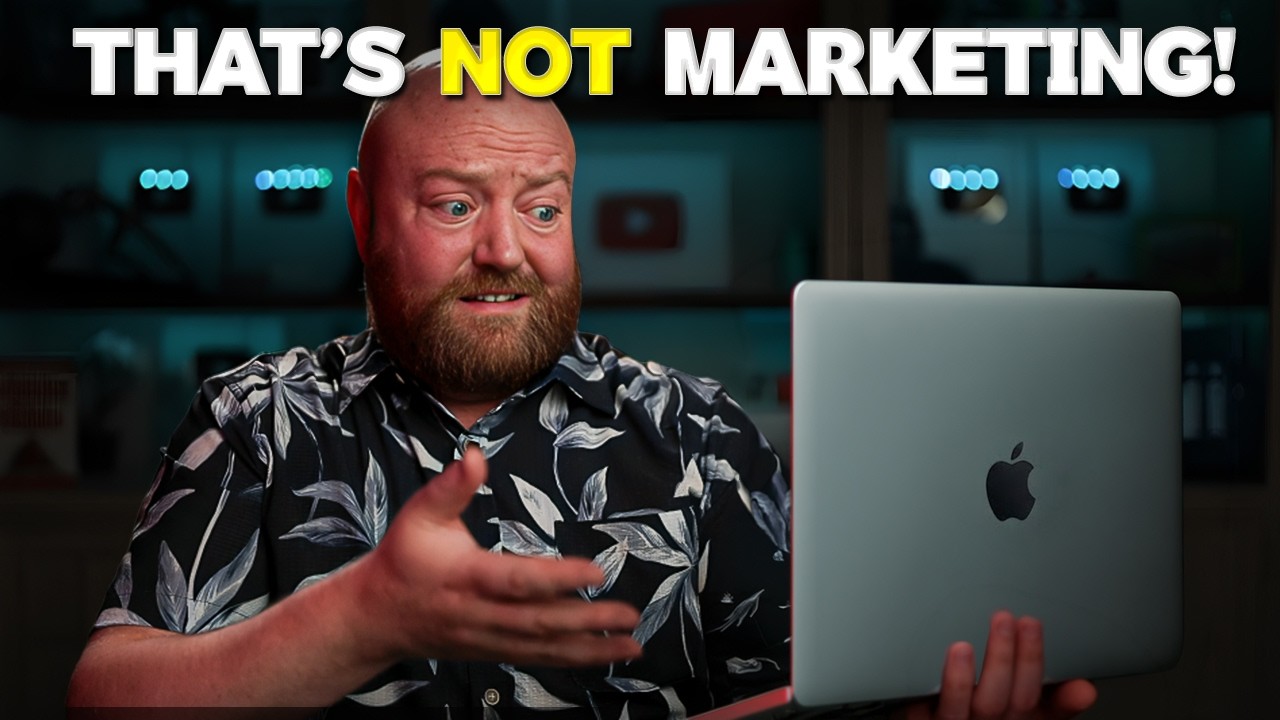
What is the best software for answer engine optimization (AEO)?
The honest answer: there is no single “AEO software” that does everything correctly.
In fact, many tools claiming to help with AEO are built on outdated SEO principles from before 2015 — when :contentReference[oaicite:0]{index=0} shifted from ranking websites to prioritizing answers.
Let’s break this down into three categories:
- Tools that don’t work (or are misleading)
- Tools that are useful (with limitations)
- What actually works for tracking AEO success
Tools That Don’t Work for AEO
1. VidIQ
:contentReference[oaicite:1]{index=1} gives videos a “score” based on tags, keyword usage, and optimization checklists.
The problem?
You can have a low VidIQ score and still rank #1 on YouTube search.
That’s because YouTube’s AI doesn’t rely on tag stuffing or metadata formulas anymore. It analyzes:
- Full video transcripts
- Viewer retention
- Click-through rate
- Engagement patterns
Optimization checklists ≠ ranking power.
2. TubeBuddy
:contentReference[oaicite:2]{index=2} provides:
- SEO scores
- Tag suggestions
- Keyword grades
But many tag suggestions are irrelevant or loosely related. These systems were built around old SEO assumptions — not modern answer engine behavior.
If a video ranks #1 while scoring 50%, the scoring system clearly isn’t measuring what matters.
Useful Tools (With Limitations)
1. Ahrefs
:contentReference[oaicite:3]{index=3} is powerful for question research.
Pros:
- Finds long-tail search queries
- Surfaces multi-word question phrases
Cons:
- Expensive
- Built primarily around website SEO
- Tracks visibility tied to your domain
2. SEMrush
:contentReference[oaicite:4]{index=4} (specifically the Keyword Magic Tool) is one of the most useful tools for AEO — when used properly.
The key is this:
- Ignore traditional keyword metrics.
- Turn on the “Questions” filter.
- Filter by word count (8–10+ words).
You’re not looking for keyword volume.
You’re looking for exact questions real people are typing.
That’s the foundation of AEO.
The Big Limitation of SEO Software
Most SEO tools — including Ahrefs and SEMrush — measure performance tied to your website.
But modern answer engine optimization is heavily driven by YouTube.
:contentReference[oaicite:5]{index=5} is indexed by Google and surfaces directly inside AI tools like :contentReference[oaicite:6]{index=6}.
If 90% of your search traffic is coming from YouTube, website-based ranking tools only show part of the picture.
What Actually Works for AEO
Here’s the practical stack:
Step 1: Use SEMrush (or Ahrefs) for Question Research
Find high-intent, long-form questions.
Step 2: Build a “Branch” Strategy
Group related questions into clusters (a branch of your expertise).
Step 3: Track Rankings Manually
This is where most people fail.
Instead of trusting arbitrary SEO scores, create a simple spreadsheet:
- Mark “Yes” if you rank top 3
- Mark “Top 20” if visible but not dominant
- Mark “No” if absent
Over time, track how “No” turns into “Yes.”
This shows real dominance.
Competitor Analysis (Advanced but Powerful)
Create a scoring system:
- Yes = 1
- Top 20 = 0.25
- Top 50 = 0.1
Apply it across competitors for a specific branch.
This reveals:
- Who owns the space
- Where the gaps are
- Which questions you can win quickly
Once you dominate a branch, it tends to stick for years.
So What’s the “Best” Software?
Here’s the honest breakdown:
- For question research: SEMrush
- For supplemental research: Ahrefs
- For YouTube scoring plugins: Skip them
- For tracking dominance: Your own spreadsheet
The most powerful AEO system isn’t a plugin.
It’s a strategic research process combined with disciplined tracking.
Final Thought
AEO is not about boosting a score.
It’s about owning specific question-based searches across YouTube, Google, and AI platforms.
Software can help you find questions.
But strategy — and consistent tracking — is what actually builds visibility.