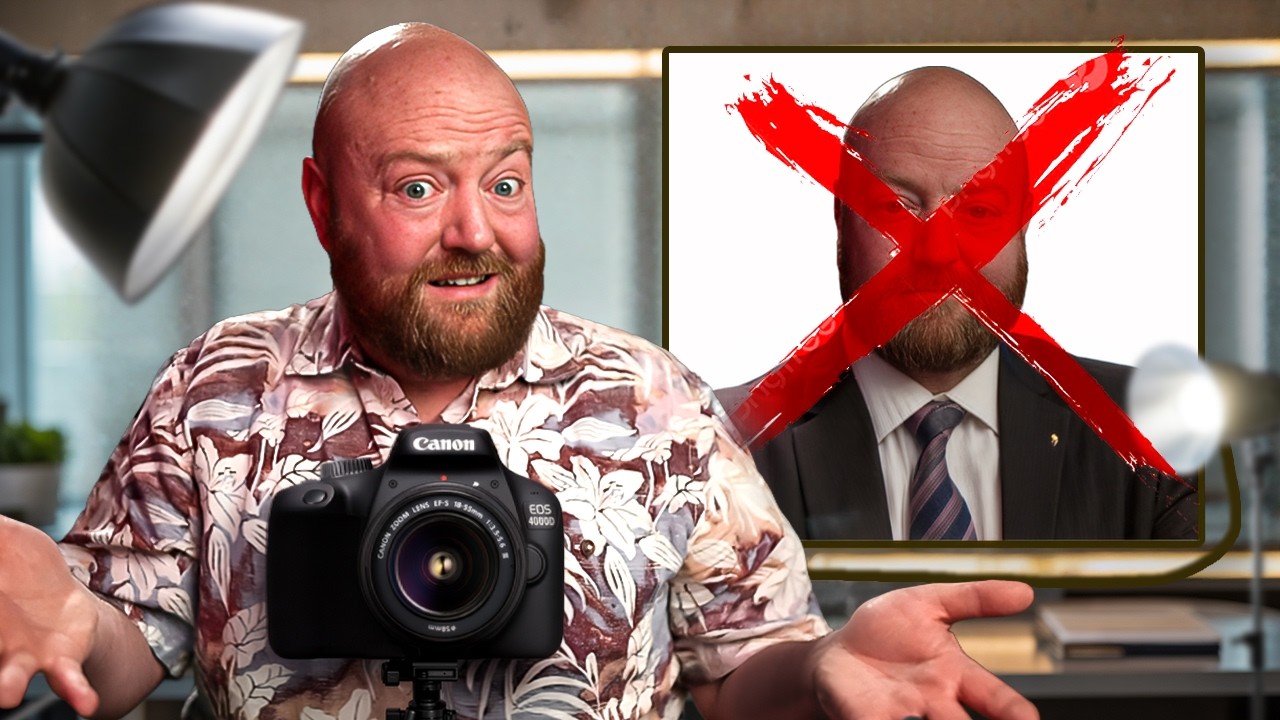
Personal branding photography is more than having a professional headshot. For a thought leader, your photography should communicate something about who you are, what you do, and how you want your ideal clients to perceive you.
Before choosing a photographer, ask yourself a simple question: What do I want people to think and feel when they see my photo?
Do you want to look like an expert, an authority, a trusted advisor, or an approachable professional? The right answer depends on your audience, your expertise, and the position you want to establish in your industry.
Personal Branding Photography Is Part of a Bigger Picture
Photography is only one component of a personal brand. For thought leaders, personal branding can be viewed through three interconnected areas:
- Thought leader image: How you are visually perceived.
- Thought leader messaging: Who you help, what problem you solve, and what outcome you create.
- Thought leader positioning: Where and how your ideal clients discover you.
Photography primarily supports your image, but it should align with your messaging and positioning. A polished photograph is only effective when it accurately reinforces the identity you are trying to build.
Make Your Photography Match Your Audience
Your personal branding photography should make sense for the people you want to reach.
For example, if you advise blue-collar business owners and normally dress in a polo shirt or T-shirt, showing up in a tuxedo might make you look impressive but disconnected from your audience.
The goal isn’t simply to look successful. It is to look credible and appropriate for the people you serve.
Consider what your ideal clients expect someone with your expertise to look like. Your wardrobe, setting, posture, and overall photographic style should support that perception while remaining authentic to who you are.
Find a Photographer by Studying the Work You Want
Rather than starting with a checklist of headshots, full-body photographs, or environmental images, begin by finding examples of photography that capture the impression you want to create.
Look at other thought leaders, even those outside your industry. Find photographs that make you stop and think, “That person looks credible, authoritative, and important.”
Then find out who took the photographs.
Don’t hire a photographer based on one impressive image. Study their entire portfolio. Look for consistency and ask:
- Does their work consistently have the quality I want?
- Do they photograph people similar to me?
- Can I see myself represented in their portfolio?
- Does their style match the image I want to build?
A photographer may produce exceptional work with one type of subject but have less experience photographing people like you. The entire portfolio provides a much better indication of whether they are the right fit.
Let Your Photographer Handle the Photography
Once you’ve found the right photographer, trust their expertise. A good photographer can help with wardrobe, locations, backgrounds, lighting, posing, and the overall visual quality of the shoot.
You don’t need to become a photography expert. Your responsibility is to understand how photography fits into your broader personal branding strategy.
That distinction is important because even an exceptional photograph cannot guarantee new clients. Photography supports your brand; it doesn’t replace your marketing, messaging, or positioning.
Make Sure Your Image Matches Your Messaging
Your photographs should reinforce the message you are communicating everywhere else.
Be clear about three fundamental questions:
- Who do you help?
- What problem do you solve?
- What outcome do you create?
Then consider whether the person portrayed in your photographs matches those answers.
If your website says one thing but your visual identity communicates something completely different, your personal brand can feel inconsistent. Strong branding creates alignment between what you say and what people see.
Photography Can’t Replace Being Findable
Great photography becomes much more valuable when people are already discovering your expertise.
Imagine that your ideal client searches Google or YouTube for a question you are uniquely qualified to answer. They discover your content, experience your expertise, and then visit your website to learn more about you.
At that point, your photography can reinforce what they have already started to believe.
Instead of making the photograph responsible for creating your authority, it becomes evidence that supports it: “Yes, this person looks like the expert I’ve been looking for.”
That’s why photography should work alongside strong messaging and positioning. If your ideal clients never discover you, even the best photography has limited impact.
Don’t Overspend on Personal Branding Photography
Professional photography can be valuable, but it shouldn’t create unnecessary financial pressure.
If you cannot currently afford your ideal photographer, start with an option that fits your budget and improve your photography as your business grows. Your personal brand can evolve over time.
A poor-quality photograph can hurt your credibility, particularly when someone has already been referred to you and visits your website. But photography alone isn’t what makes you a thought leader.
Think of it as one component of a larger system that includes expertise, messaging, positioning, and visibility.
Look the Part, Then Build the Authority
Personal branding photography helps you look the part, but becoming the recognized authority in your field requires more than appearances.
You need expertise that creates genuine value, messaging that clearly communicates what you do, and positioning that puts your expertise in front of the people who need it.
When those elements work together, your photography stops being just a collection of professional images. It becomes part of a cohesive personal brand that reinforces your authority every time someone encounters you.
Final Takeaway
The purpose of personal branding photography isn’t simply to make you look good. It’s to visually communicate the identity you want to build with the audience you want to serve.
Choose photography that matches your audience, messaging, personality, and desired positioning. Study photographers’ portfolios carefully, trust their technical expertise, and avoid spending beyond your means.
Most importantly, remember that great photography supports thought leadership—it doesn’t create it. Build the expertise and visibility first, then use your personal brand photography to make sure you look the part when your dream clients find you.