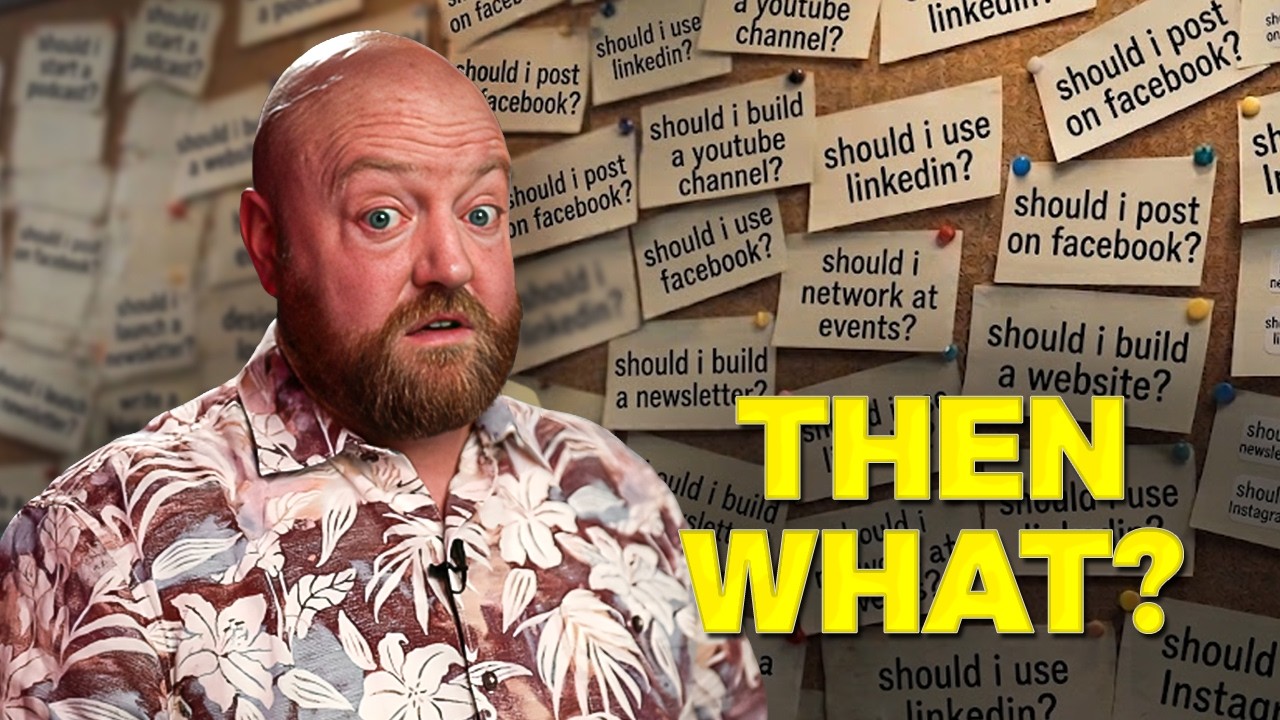
Marketing advice often starts with an activity: start a podcast, write a book, post on LinkedIn, build an email list, or launch a YouTube channel. But an activity is only useful when it moves you toward a specific result.
The outcome-first approach reverses the process. Instead of asking, “What should I do?”, start by asking, “What outcome am I trying to achieve?” Then work backward to determine which activities will actually help you get there.
Start With the Outcome, Not the Activity
Every marketing activity should have a purpose. Without a clearly defined outcome, it is easy to stay busy without making meaningful progress.
Consider a simple example: if the goal is to have a building clean every Sunday, creating a volunteer sign-up sheet is only one possible solution. It may work, but it may not. The better approach is to start with the desired result and determine what system will reliably produce it.
Marketing works the same way. The question isn’t whether an activity is good or bad. The question is whether it is appropriate for the outcome you want.
Should You Start a Podcast?
There is no universal answer to whether someone should start a podcast. The right decision depends on what the podcast is supposed to accomplish.
A podcast might be useful if your goal is to:
- Build relationships with industry leaders
- Develop relationships with potential partners
- Nurture an existing audience
- Build credibility with people who already know you
But if your primary goal is to have thousands of new prospects discover you through podcast search, a podcast may not be the most appropriate strategy.
The same activity can be valuable for one outcome and ineffective for another.
Should You Write a Book?
Books can be powerful tools for building authority, sharing ideas, and establishing credibility. But writing a book can also require a significant investment of time and energy.
Before committing to the project, define the expected outcome.
Ask:
- Do I want to become an author?
- Do I expect the book to generate clients?
- Will the book establish my expertise in a particular category?
- How will my ideal clients actually discover the book?
- What should happen after someone reads it?
The answers determine whether writing a book is the right marketing activity for your current objective.
Marketing and Nurturing Are Different Goals
One of the most useful distinctions in an outcome-first strategy is the difference between marketing and nurturing.
Marketing is about attracting people who do not know you yet. Nurturing is about building relationships with people who already know you.
These goals require different strategies.
Nurturing Existing Relationships
Email can be an effective nurturing channel because subscribers have already chosen to hear from you. Social platforms can also help you remain visible to existing followers, friends, and connections.
The goal isn’t necessarily to introduce yourself to a completely new audience. It is to strengthen relationships and stay relevant to people who already have some awareness of you.
Attracting New People
When the goal is attracting people who have never heard of you, the strategy changes. Broadly, there are several ways to reach new audiences:
- Create content that earns significant organic attention
- Use paid advertising to place your message in front of new audiences
- Create searchable content that answers questions people are already asking
Each approach has different costs, mechanics, and implications for how people first encounter your brand.
Searchable Content Creates a Different First Impression
Search-based content starts with an existing need. Someone has a question, problem, or goal, and they actively look for an answer.
If your content provides that answer, the relationship begins with value rather than interruption. Instead of asking someone to trust your expertise because of an advertisement or credential, you give them an opportunity to experience your expertise directly.
When that happens repeatedly, your content can become associated with the questions and problems your ideal clients care about most.
Work Backward From Transformation
An outcome-first thought leadership strategy can begin with transformation.
- Define the transformation. What meaningful outcome can you help people achieve?
- Identify the audience. Who needs that transformation most?
- Choose the category. What area do you want to become known for?
- Identify the branch. What specific topic area within that category represents your expertise?
- Find the questions. What questions are your ideal clients already asking?
- Create the content. Answer those questions consistently and usefully.
- Build authority. Continue until your content becomes a recognized resource within that topic area.
This framework replaces the question “What should I create today?” with a more strategic question: “What questions are my ideal clients already asking?”
Category Ownership Is the Long-Term Outcome
The purpose of this approach isn’t simply to produce more content. It is to build authority within a specific category.
Think of your strategy as a tree. The overall outcome is category ownership. The branches represent the topic areas where you need to establish authority. The leaves represent the individual questions your audience is asking.
Those questions become your content opportunities.
As you consistently answer relevant questions, your body of content can become increasingly associated with that category. Instead of creating content randomly, every piece contributes to a larger strategic objective.
Stop Measuring Activity as Progress
It is possible to spend years creating content, attending networking events, launching podcasts, writing books, and building websites without being clear about what those activities are supposed to accomplish.
Being busy is not the same as making progress.
Progress should be measured against the outcome you originally defined. If an activity isn’t contributing to that outcome, it deserves to be reconsidered.
The Outcome-First Principle
The most important principle is simple: don’t start with the activity. Start with the outcome and work backward.
Once you know what you want to accomplish, many marketing decisions become easier. You can determine who you need to reach, what they need, where they search for answers, what topics you should own, and what content you need to create.
The result is a marketing strategy driven by purpose rather than trends.
The best next activity isn’t the one everyone else is doing. It’s the one that moves you closer to the outcome you actually want.