Can you use virtual assistants to build thought leadership?
Yes.
Can you outsource thought leadership completely?
No.
If you misunderstand that distinction, you’ll either waste money—or stall your authority before it ever gains traction.
In this article, we’ll break down the exact role virtual assistants should play in building thought leadership content, the biggest misconceptions to avoid, and the predictable path to category dominance.
First: You Cannot Outsource Thought Leadership
Thought leadership requires one non-negotiable ingredient:
Your thoughts.
Your experience. Your opinions. Your biases. Your stories.
You cannot hire a company, hand them money, disappear, and expect them to manufacture authority on your behalf.
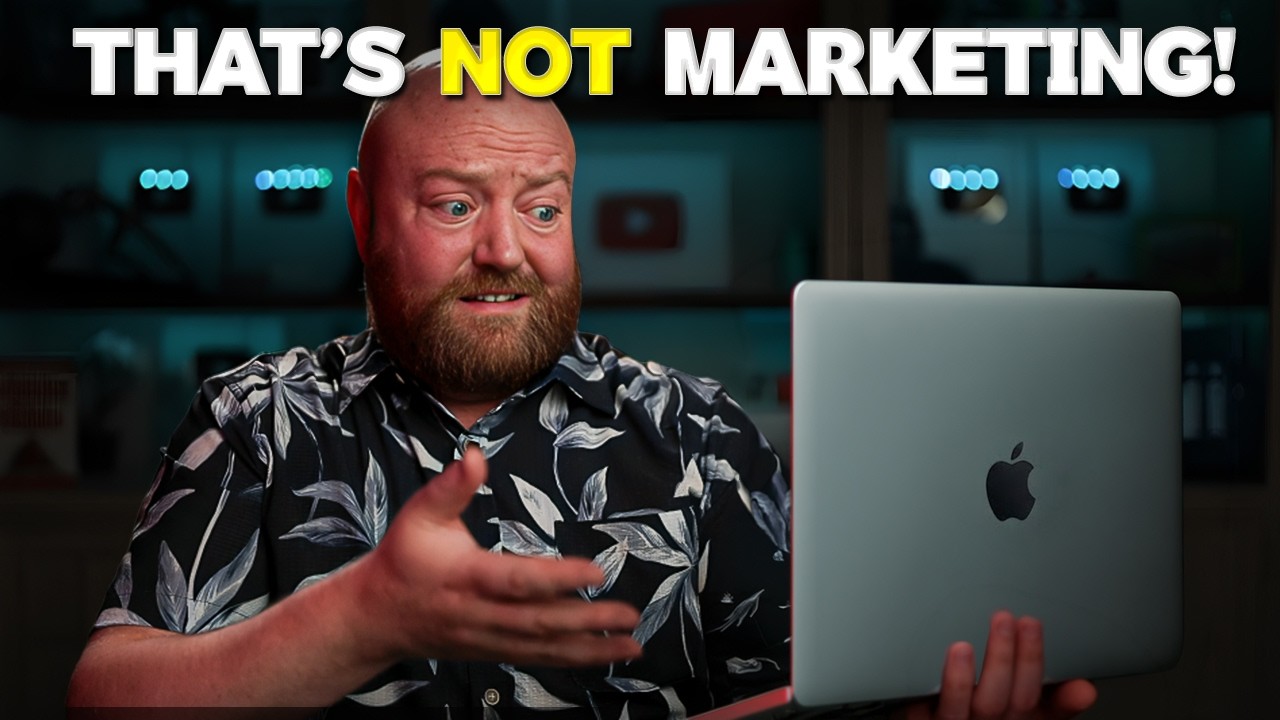
If the content does not contain your voice and perspective, it is not thought leadership—it’s content marketing.
AI tools can write clean articles. Virtual assistants can edit, upload, and distribute. But none of them can replicate your lived experience.
Authority comes from applied knowledge and proven results. That must come from you.
What Virtual Assistants Should Actually Do
While you cannot outsource your voice, you can absolutely outsource execution.
Virtual assistants can help with:
- Researching searchable questions in your niche
- Organizing content ideas into production calendars
- Editing video and audio
- Uploading and optimizing YouTube videos
- Creating thumbnails
- Transcribing videos
- Turning transcripts into blog articles
- Embedding videos on your website
- Publishing and formatting posts
They handle the infrastructure.
You provide the insight.
That combination is powerful.
The Two Paths: Viral vs. Predictable
When building thought leadership, most people chase the viral path.
They hope one video explodes and changes everything.
But virality is:
- Rare
- Unpredictable
- Not repeatable on command
For every viral success, there are millions of failed attempts.
The predictable path is different.
Instead of hoping for attention, you answer specific, searchable questions in your niche.
You build category dominance systematically.
Why Traditional SEO Isn’t the Strategy Anymore
Old-school SEO focused on:
- Keywords
- Metadata
- Tags
- Link building
Today’s search engines and AI systems are dramatically smarter.
People no longer search using two-word phrases. They type full questions. Sometimes full paragraphs.
Search has evolved from basic optimization into answer engine optimization.
Your job is no longer to “optimize for keywords.”
Your job is to directly answer the exact questions your ideal clients are asking.
Where You Should (and Shouldn’t) Publish
Not all platforms are equal.
If your goal is thought leadership through search dominance, focus on platforms that are indexed and searchable.
That eliminates:
- X (Twitter)
Those platforms are primarily feed-based and interruption-driven.
Instead, focus on:
- YouTube (fully indexed and searchable)
- Your website blog (with embedded YouTube videos and transcripts)
YouTube analyzes every spoken word. It analyzes visuals. It indexes the entire video.
When you embed that video on your website and turn the transcript into an article, you multiply your discoverability.
This combination positions you to be found on Google and referenced by AI tools.
The Formula for Using Virtual Assistants Effectively
Step 1: Identify Searchable Questions
Your VA researches highly specific questions in your niche.
Step 2: Record Expert Answers
You film videos answering those questions directly and authentically.
Step 3: Systemize Production
Your VA edits, uploads, formats, writes descriptions, and publishes.
Step 4: Repurpose Strategically
Transcripts become blog posts. Videos are embedded on your site. Content is indexed.
Step 5: Track Rankings
Measure how many questions you rank for at the top.
That is how you measure thought leadership—not by likes or followers, but by search dominance.
The Real Goal: Category Dominance
Thought leadership is not about posting everywhere.
It’s about owning a specific category.
When someone types a question in your niche and finds you repeatedly—across YouTube, Google, and AI tools—you become the default authority.
That is predictable. That is measurable. And with the right systems and virtual assistants supporting you, it’s achievable in months—not years.
Final Thoughts
Virtual assistants are not a shortcut to authority.
They are an accelerator for execution.
If you provide the expertise and voice, and your team provides precision and consistency, you can build lasting thought leadership without chasing virality.
Authority isn’t outsourced.
But it can absolutely be systemized.