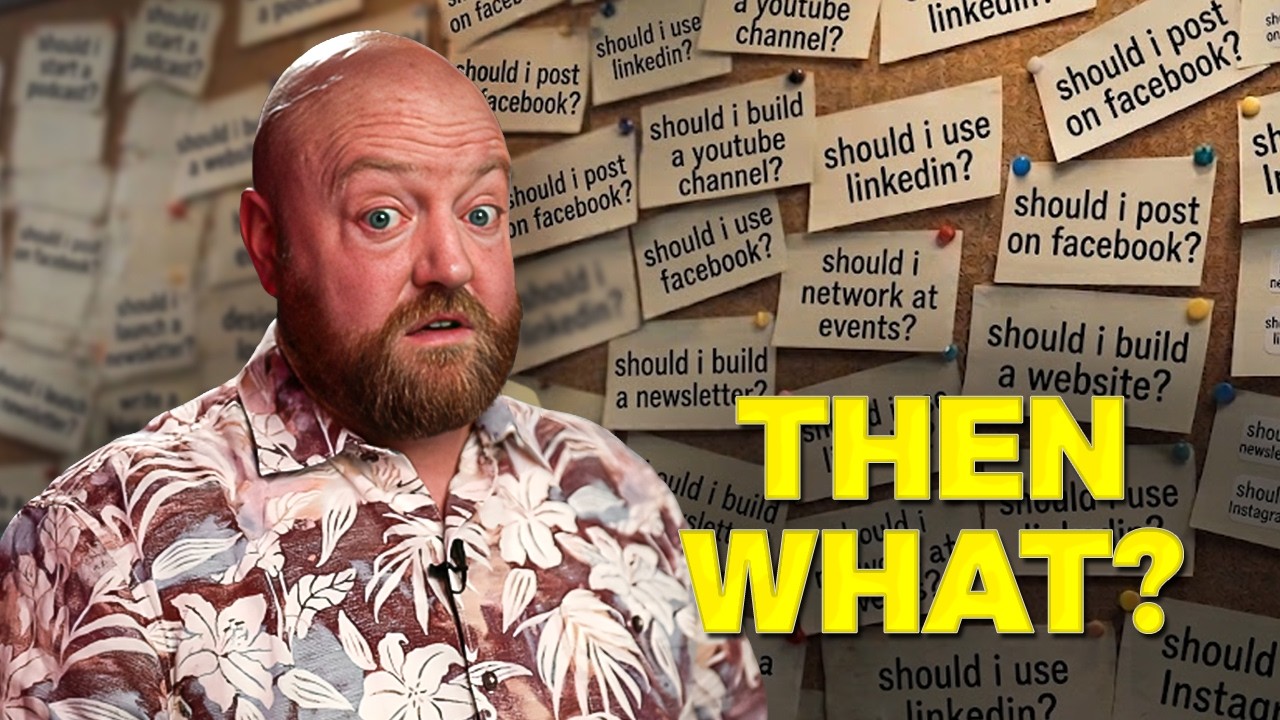
In this episode, we’re talking about how to create evergreen content that stays relevant long-term.
Evergreen content is one of the most valuable assets you can create online, yet it is also one of the most misunderstood.
The word “evergreen” has become a marketing buzzword. Many people use it to describe things that are not truly evergreen, such as an evergreen webinar.
Usually, what they mean is that the webinar converts well enough to continue running paid ads profitably.
That’s valuable, but it is not the same thing as evergreen content.
A webinar that consistently converts is simply a high-converting webinar.
True evergreen content is something entirely different. When done correctly, it can outperform paid traffic for years.
The term comes from evergreen trees, which stay green throughout the year. The content equivalent is content that continues generating results over time because people keep finding it organically.
No ads required.
There is a specific type of content that does this exceptionally well. It is predictable, scalable, and often easier to create than most people realize.
Why Most Online Content Dies Quickly
Most online content is not evergreen because it has no built-in mechanism for long-term discovery.
You publish it, it reaches your followers, maybe it creates a temporary spike in views, and then it disappears.
This is how most social media platforms operate.
Platforms like Facebook, Instagram, LinkedIn, and X are built around:
- Momentum
- Virality
- Recency
- Current events
These platforms are not organized around searchable topics.
As a result, trend-based content often generates short-term attention but little long-term value.
When the trend disappears, the visibility disappears with it.
The Trap Most Creators Get Stuck In
Many creators experience a cycle of growth spikes followed by long periods of stagnation.
They spend all their time creating content with no lasting shelf life.
Every week starts from zero.
Evergreen content works differently because it is tied to persistent human questions.
- Questions people asked years ago
- Questions people are asking today
- Questions people will continue asking years from now
If your content becomes the best answer to one of those questions, it can continue producing results indefinitely.
How Evergreen Content Continues Driving Results
Some videos continue ranking years after they are published because the underlying question never disappears.
When someone finds your content at the exact moment they need help, the experience is different from consuming a random viral video.
They feel:
- Understood
- Relieved
- Grateful
You solved a problem they were actively trying to solve.
Because the problem persists, people continue searching for answers.
That is why true evergreen content has no meaningful expiration date.
Many creators believe viral success is predictable. It is not.
For every viral hit, there are countless pieces of content that never gain traction.
Evergreen content is different because the demand already exists.
You are simply creating the best answer to a question people consistently search for.
Why Evergreen Content Is Easier to Create
The most effective evergreen content is often long-tail, question-based content.
The more specific the question, the better.
This type of content is usually simpler to produce because it does not require:
- Large production budgets
- Travel footage
- Cinematic storytelling
- Constant reinvention
Most of the time, it is simply a talking-head video that answers a specific question.
Instead of inventing new ideas every day, you create content based on questions your ideal clients are already asking.
This makes content creation more systematic and significantly reduces creative fatigue.
Example: Stan The Annuity Man
One of the best examples of an evergreen content strategy is Stan The Annuity Man.
While many insurance agents experimented with YouTube, Stan committed to answering highly specific annuity questions.
Even when the topics seemed repetitive, he consistently created content around the exact questions his audience was searching for.
As a result, people searching for those answers repeatedly discovered his content.
Over time, he became the dominant authority in his category.
Example: Regan Archibald
Another example is Regan Archibald in the men’s health and peptides space.
Rather than relying on trends, he built a large library of content around specific audience questions.
Within a year, this approach generated significant search traffic and positioned him as a recognized authority in his niche.
The growth came from visibility in search—not from viral content.
Viral Spikes vs Long-Term Growth
There is a major difference between viral growth and evergreen growth.
Viral content often creates short-term excitement and visibility.
However, it frequently attracts people who are entertained rather than ready to buy.
Evergreen content attracts people actively looking for solutions.
These users are often much closer to becoming leads or customers.
Even with lower view counts, the business value can be significantly higher.
This does not mean you should only create evergreen content.
It is important to understand the difference between:
- Marketing content — helps new people discover you
- Nurturing content — keeps your audience engaged
Evergreen content excels at attracting new audiences, while topical content can help strengthen existing relationships.
How to Build an Evergreen Content Strategy
Start by identifying the category you want to dominate and the audience you want to reach.
Then learn how your audience describes their problems.
Ask questions such as:
- What are they struggling with?
- What frustrations do they have?
- What goals are they trying to achieve?
- What words do they use when searching online?
Next, evaluate different groups of questions and identify:
- Which align with your expertise
- Which have strong search demand
- Which attract your ideal clients
Building Your Evergreen Content Library
Once you identify a cluster of related questions, each question becomes a content opportunity.
Each question can become its own video, article, or episode.
Over time, these assets form an evergreen content library.
That library continues generating traffic, authority, and leads long after the content is published.
If your goal is long-term visibility, focus on consistently answering real questions and solving real problems year after year.