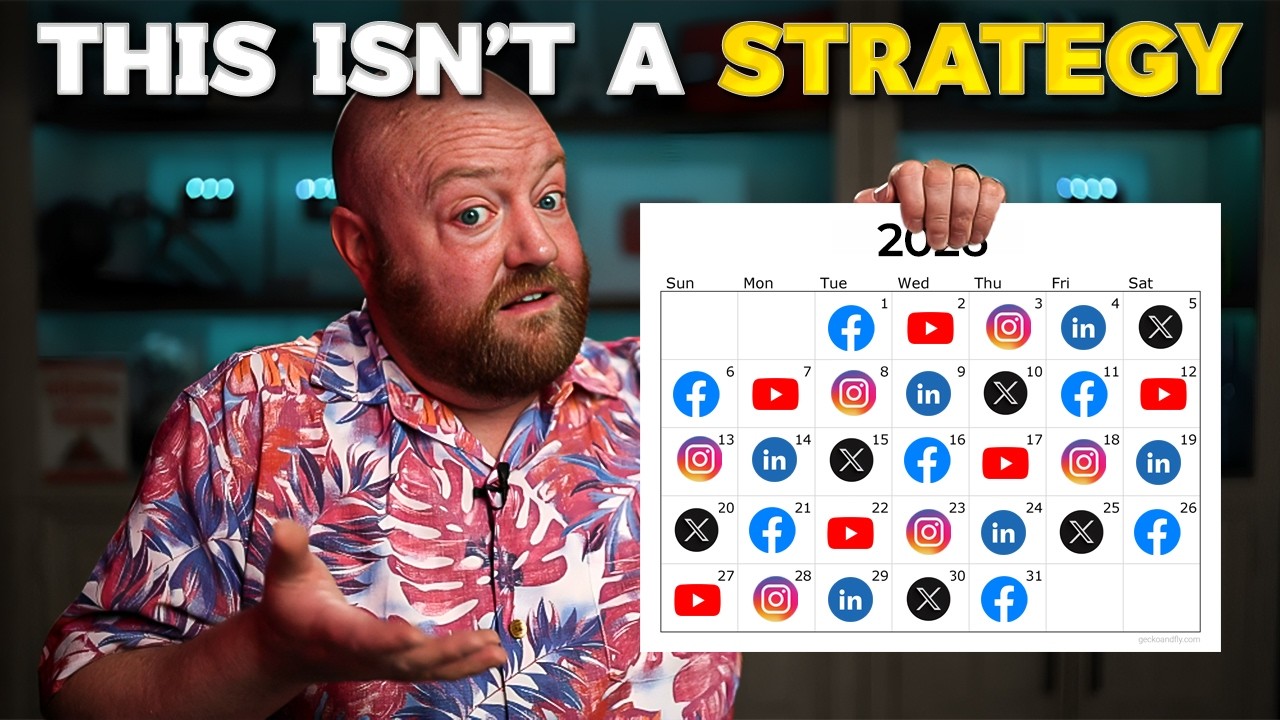
A content calendar tells you when to publish. A content strategy explains who you want to reach, which problems you will address, and how your content will help people recognize your expertise.
Consistent publishing alone does not establish authority. Strategic content planning builds recognition around specific problems your ideal clients need help solving.
Define the Authority You Want to Build
For an expert-led business, brand authority reflects how potential clients perceive your expertise and value. Your content helps them assess your understanding of their situation.
A focused position makes that assessment easier. Becoming known for solving a specific problem gives your audience a clear reason to remember you.
Before planning individual posts or videos, define:
- The people you want to reach.
- The problems you are qualified to solve.
- The category you want people to associate with your expertise.
- The business outcomes your content should support.
Map Your Expertise as a Tree
A tree provides a useful model for organizing content opportunities:
- The trunk: Your overall industry or area of expertise.
- The branches: Distinct categories within that expertise.
- The leaves: Specific questions people ask about each category.
Each branch represents a potential area of focus. Some attract the wrong audience. Others face strong competition or contain too few relevant questions to support sustained coverage.
The strongest opportunities combine audience relevance, meaningful demand, and gaps you can address.
Research Your Audience’s Actual Questions
Experts often describe problems through proprietary frameworks, acronyms, or industry terminology. Potential clients may use entirely different language.
Research should uncover how those people describe their challenges. Their wording can reveal their circumstances, priorities, and level of understanding.
A useful question does more than suggest a topic. It helps identify the person your answer will serve.
Compare Categories Before Committing
Evaluate several potential branches before choosing your primary focus. Compare them using the same criteria:
- Audience fit: Are the questions coming from people you can help?
- Business relevance: Do their needs connect to your services?
- Depth: Are there enough distinct questions for substantial coverage?
- Demand: Is there evidence that people search for these answers?
- Competition: How well do existing results answer each question?
A category with dozens of relevant questions can provide a strong foundation. The number itself is less important than the quality of the opportunity.
Start With Specific, Underserved Questions
Broad topics often face substantial competition. Narrow questions may offer clearer opportunities, especially when existing results fail to address the precise need.
Begin with questions you can answer thoroughly and distinctly. Expand toward broader subjects as your coverage develops.
Longer queries can reveal useful specificity. Word count itself does not determine competition or guarantee rankings.
Category ownership means becoming a consistently useful source across related questions. It develops through focused coverage and audience recognition.
Balance Focus With Selective Experimentation
Spreading production equally across several categories slows progress within each one. Concentrating most of your effort on a primary category supports deeper coverage.
A smaller allocation to secondary categories provides useful testing opportunities. For example, a batch of 20 videos might include 12 from the primary category and eight across other promising areas.
Early results can reveal unexpected opportunities. Those findings can guide the next category or justify a change in focus.
Measure Discovery and Business Results
Publication counts measure activity. Stronger evaluation connects content performance with audience discovery and business value.
- Search visibility: Are relevant answers appearing in search results?
- Search traffic: Is discovery through search increasing over time?
- Audience response: Are relevant visitors subscribing or requesting resources?
- Client acquisition: Are inquiries becoming qualified conversations and paid work?
Rankings provide useful evidence of discoverability. Client fit and business outcomes reveal whether that visibility supports your goals.
Strategic content planning connects research, focused production, and ongoing evaluation. The calendar becomes an execution tool for a clear direction: building recognized expertise among the people who need it.