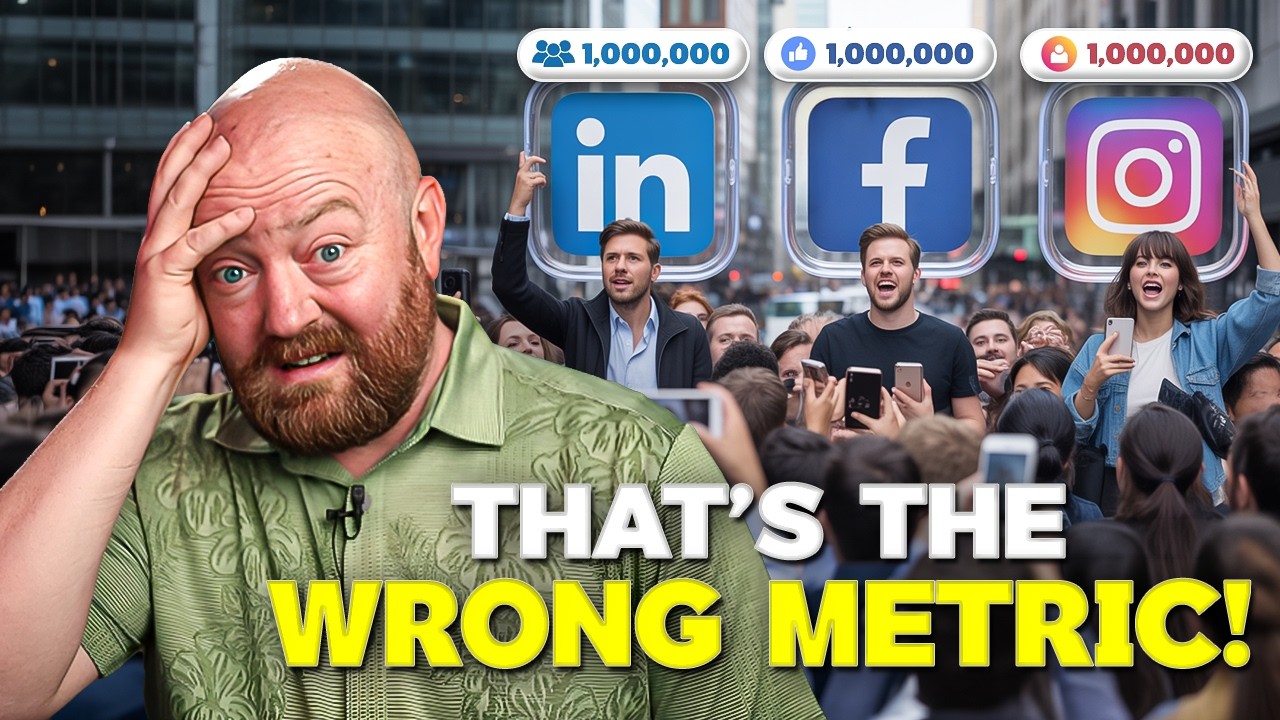
How many followers do you need to become a thought leader—10,000, 100,000, or a million? The answer is that follower count isn’t what creates thought leadership. True thought leadership is about becoming the obvious choice for the right audience, not attracting the largest audience possible.
Followers Only Matter If They’re the Right People
A large audience can look impressive, but size alone doesn’t determine its business value. For a thought leader, the most valuable followers are people who have a problem you can solve and are actively looking for your expertise.
Consider the difference between an entertainment-focused creator and an industry expert. An entertainment creator may need millions of viewers because advertising revenue depends heavily on reach. A thought leader may only need hundreds of highly targeted people if those people include potential clients.
A follower has value when they are part of the audience you actually want to serve.
Views and Leads Are Different Goals
The transcript illustrates this distinction through a conversation between two YouTube creators. One channel had around 65,000 subscribers but was generating substantially more business revenue than another channel with approximately 11 million subscribers.
The difference wasn’t necessarily the quality of either strategy. They were solving different problems.
If your goal is advertising revenue, views, subscribers, and virality can be important. If your goal is becoming the go-to authority in an industry, the priority shifts toward qualified attention, trust, and leads.
A video that attracts a small number of people searching for a specific solution can be more commercially valuable than a viral video watched by millions of people who have no need for your services.
The Hidden Risk of Going Viral
Going viral can create an audience that doesn’t match the audience you ultimately want to reach. Someone might subscribe because they found a video entertaining or because it happened to become popular, rather than because they need your expertise.
That can create a problem on platforms that use audience behavior to determine what content to recommend. If a large group of viewers engages with your content for reasons unrelated to your core subject, future content aimed at your ideal clients may receive less relevant distribution.
This is why subscriber growth shouldn’t automatically be treated as a success. The more important question is why people subscribed.
Trust Is More Valuable Than Reach
Thought leadership works differently from traditional advertising. Instead of interrupting people with a promotion, you allow people to discover you while they’re looking for an answer.
That changes the sequence:
- Someone has a problem or question.
- They search for an answer.
- They discover your content.
- Your content demonstrates your expertise.
- Trust develops.
- They consider you when they’re ready for help.
The objective isn’t simply to get seen. It’s to be discovered by someone who already has a reason to pay attention.
Evergreen Search Can Attract Dream Clients
Some of the most valuable content may never generate millions of views. Instead, it can attract a small number of highly relevant viewers through search month after month or year after year.
These viewers are different from random traffic. They searched for a problem, found an answer, and may continue exploring your content because they believe you can help them solve it.
That makes evergreen, question-driven content particularly valuable for thought leaders. The goal is not maximum exposure. The goal is consistent discovery by the people who need your expertise.
Measure Whether You’re Becoming the Obvious Choice
Follower count is easy to measure, but it may not be the most meaningful measurement for a thought leadership strategy.
Instead, ask:
- Are the right people finding my content?
- Does my content answer the questions they care about?
- Does it demonstrate useful expertise?
- Are potential clients developing trust in my work?
- When people need help in my area of expertise, do they consider me?
- Does my content generate qualified conversations and leads?
These questions shift the focus from audience size to category ownership and relevance.
Build the Right Audience, Not the Biggest One
Once you stop treating followers as the goal, your content strategy can become much more focused. You don’t have to chase every trend, entertain everyone, or create content simply because it might go viral.
Instead, create content for the people you most want to serve. Answer their questions. Solve meaningful problems. Demonstrate your expertise consistently. Let the right audience discover you.
Thought leadership isn’t about building the biggest audience. It’s about becoming the obvious choice for the right audience.