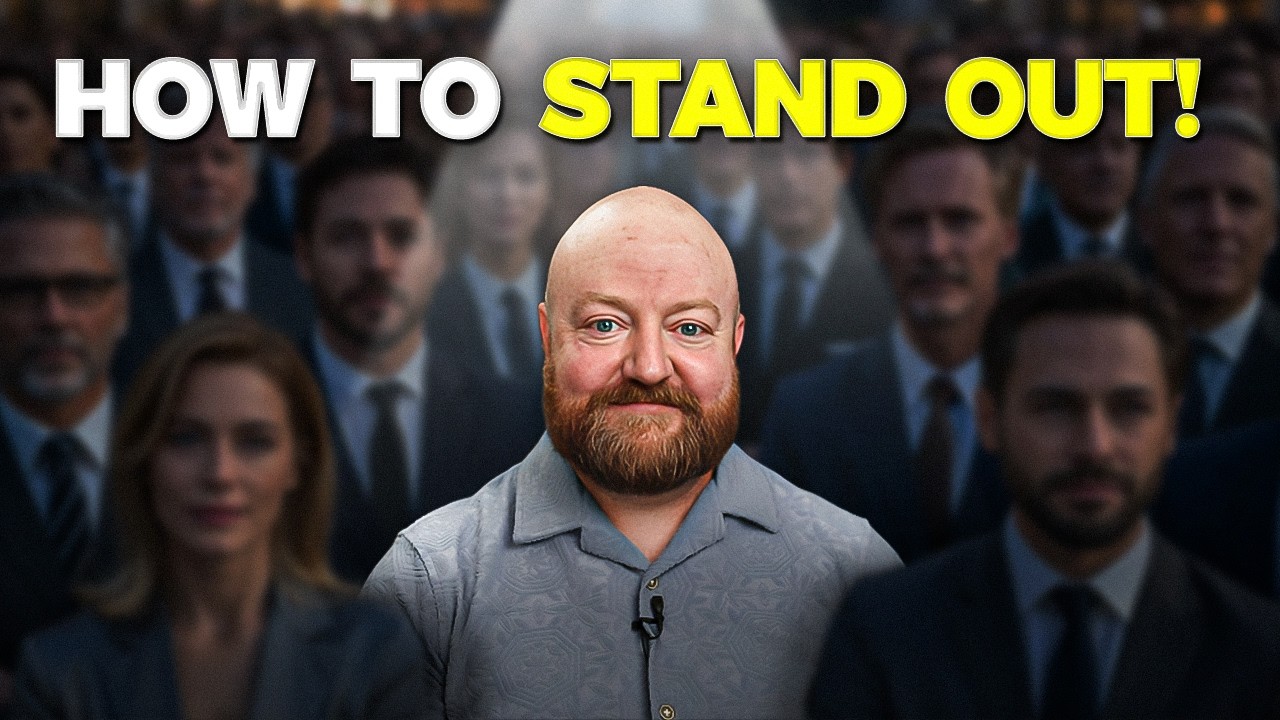
How do you actually become a thought leader—and why do some people get recognized while others with equal expertise stay invisible?
The difference isn’t intelligence or effort. It’s positioning. Thought leadership isn’t about saying smart things. It’s about becoming the obvious answer when the right people are looking for help.
Here’s the framework that actually works.
Why “Your Industry” Is the Wrong Target
If your goal is to become a thought leader in your industry, you’ve already made it harder than it needs to be.
Industries are too broad. They contain too many audiences, too many problems, and too many competing voices.
When your messaging is broad, two things happen:
- You blend in with everyone else
- Your ideal clients don’t recognize that you’re for them
Thought leadership doesn’t come from reaching everyone. It comes from owning a very specific space.
How to Define Your Real Audience
You don’t find your audience by guessing—you find it by analyzing your past work.
Start with these questions:
- Which clients did you enjoy working with the most?
- Which clients got the best results?
- What specific problems did you solve for them?
- Which work was most profitable and fulfilling?
Patterns will emerge. Those patterns point to your true audience.
This is where most people stop too early. They define a demographic instead of defining a situation.
Your audience isn’t “business owners.” It’s something like:
“SaaS founders struggling to convert trial users into paying customers.”
That level of specificity is what creates authority.
The 3 Levels of Expertise
Not all expertise builds authority. There are three distinct levels:
Level 1: Knowledge
You’ve studied the topic. You understand the concepts. You can explain ideas.
Level 2: Experience
You’ve applied the knowledge. You’ve tested strategies. You’ve seen what works.
Level 3: Results for Others
You can help other people succeed consistently, even in different situations.
Thought leadership only happens at Level 3.
Why? Because authority is built on outcomes, not information.
If your content is based only on what you know, it sounds generic. If it’s based on results you’ve created for others, it becomes differentiated and credible.
Define the Outcome You Deliver
Your audience doesn’t buy your method. They buy the result.
This is where many experts lose momentum—they talk about their framework, their process, or their philosophy without clearly stating what it leads to.
Instead, define:
- Point A: Where your client starts
- Point B: The exact result you help them achieve
For example:
“I help consultants go from inconsistent leads to predictable inbound clients using search-driven content.”
That clarity does two things:
- Attracts the right people
- Repels the wrong ones
Both are equally important.
Positioning: Where Thought Leadership Actually Happens
You can have the right audience, the right expertise, and a clear outcome—but if people can’t find you, none of it matters.
Thought leadership is not just about what you say. It’s about where you show up.
Most people approach content like this:
“What should I post today?”
That’s the wrong question.
The right question is:
“What is my audience already searching for?”
Because that’s where demand already exists.
When someone has a problem, they go to search platforms and ask a question. If your content answers that question clearly and directly, you get positioned as the expert instantly.
This is how authority is built:
- You identify specific questions your audience is asking
- You create content that answers those questions precisely
- You show up consistently where those searches happen
Now you’re not interrupting people—you’re meeting them at the exact moment they need help.
What Most People Get Wrong
Most people trying to become thought leaders focus on the wrong levers:
- Posting more frequently
- Trying to go viral
- Sounding more impressive or intellectual
None of those create authority.
Authority comes from relevance, clarity, and discoverability.
If your content isn’t tied to real search intent, it becomes invisible—no matter how good it is.
How It All Comes Together
To become a true thought leader, you need four things working together:
- A clearly defined audience (not your industry)
- Level 3 expertise (results for others)
- A specific outcome (clear transformation)
- Search-based positioning (being found at the right moment)
When these align, something shifts:
- You stop competing broadly
- You start owning a niche
- You become the obvious choice for a specific problem
That’s what thought leadership actually is.
Final Thought
You don’t become a thought leader by trying to be known.
You become one by being consistently found when it matters most.
That’s the difference between visibility and authority—and it’s the difference between being recognized and being overlooked.